


Many people would describe our collection as ‘a bit random’, but we prefer the term ‘eclectic’! But this doesn’t mean that we just accept any object or archive that comes our way. We must consider our Collections Development Policy. Our museum has a statement of purpose “to promote and foster among the public knowledge, appreciation and the study of what now be termed the Arts, Humanities and Sciences.” This means that our policy for collecting is to “collect items that complement our current collections, or which are related to the history and development of the Society and local area”.
 Our current collections fit into several categories, including but not limited to Fine Art, Decorative Art, Science, Numismatics, Archaeology, Natural History, Social History, Militaria, Ethnography and our Original Collection (which is every item collected between the Society’s foundation in 1710 and its second constitution in 1814).
When someone offers us an object, we consider it at the Collections Committee and come up with a rationale for why it does or does not fit with these aims. We then send a list to the overall Society Council to advise accessioning or not based on that rationale.
Once an item passes for accessioning it is added to our accessions book and computer system with all the information relating to it.
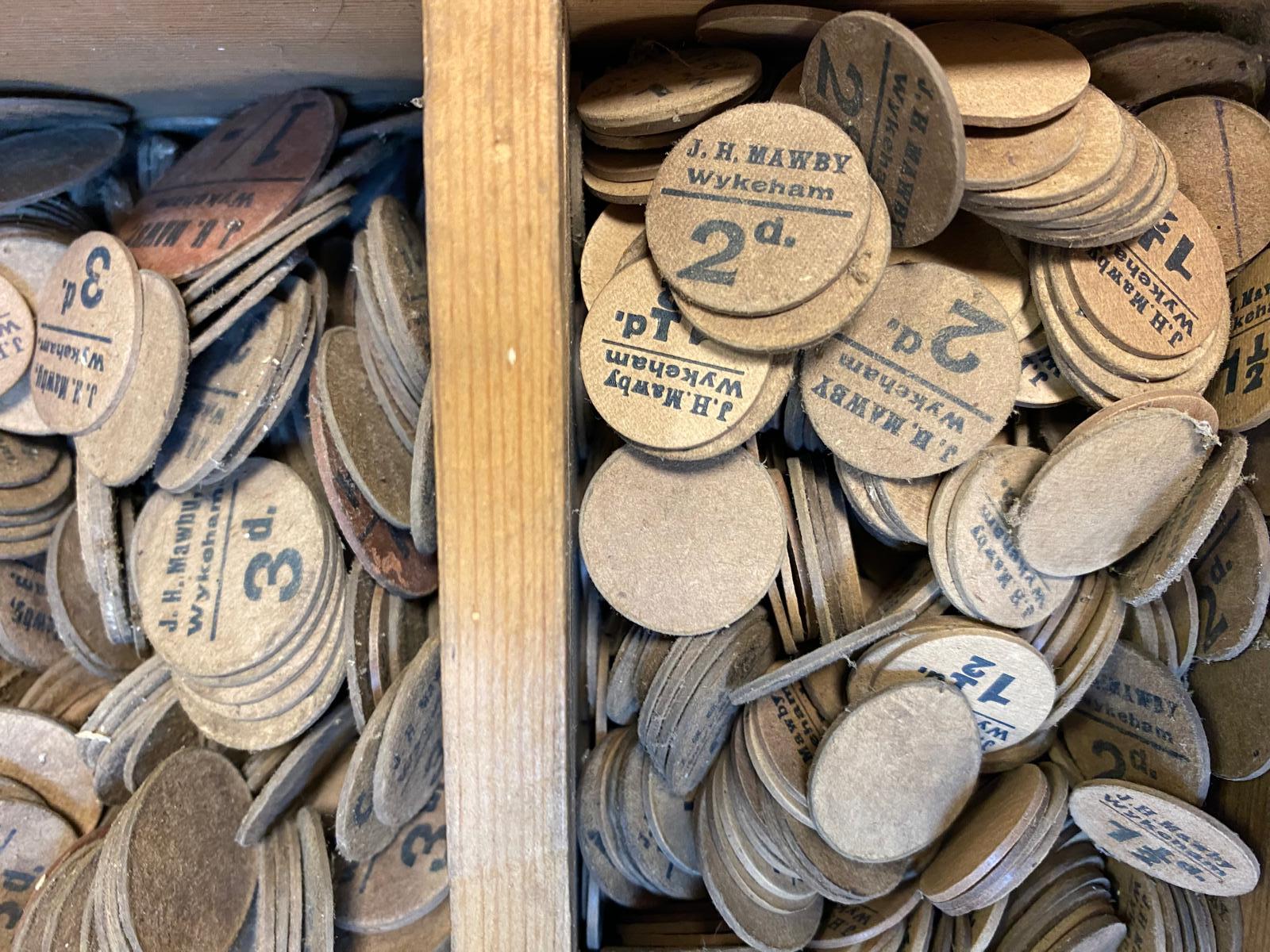
This month, we were offered and accepted a box of bulb cleaning tokens. These tokens were used by farmers at Wool Hall, by the name of Mawby. They grew daffodils and tulips in glass houses. The bulbs must be cleaned before storage to ensure they last to be replanted. The workers could take these tokens to mark how many bulbs they had cleaned and by extension how much they had earned for the day!
These have been accepted due to the local and social history link of bulb growing in and around Spalding and the context given with them of names of the family and where they lived. We did not own any items fully representing this element of the bulb industry prior to this.
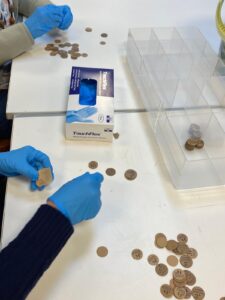
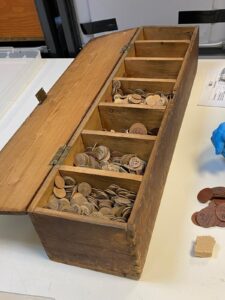 The bulb tokens and box were quarantined and then frozen to ensure no pests or contaminants were active in the item that would impact the rest of the collection. They are now being individually checked and dry cleaned by our conservation volunteers, because some of them are very dirty! And then the box itself will be hoovered out and conditioned with a small amount of beeswax to ensure that any cracks or splits don’t get worse over time. The metalwork will then be treated for active corrosion (rust), and a microcrystalline wax will be added to the surface to prevent further corrosion.
We hope to display this item soon in our museum redisplay opening in March 2027 as a good representation of a local industry.
By Eleanor Chadd, Collections & Facilities Officer

Leave a Reply
You must be logged in to post a comment.