


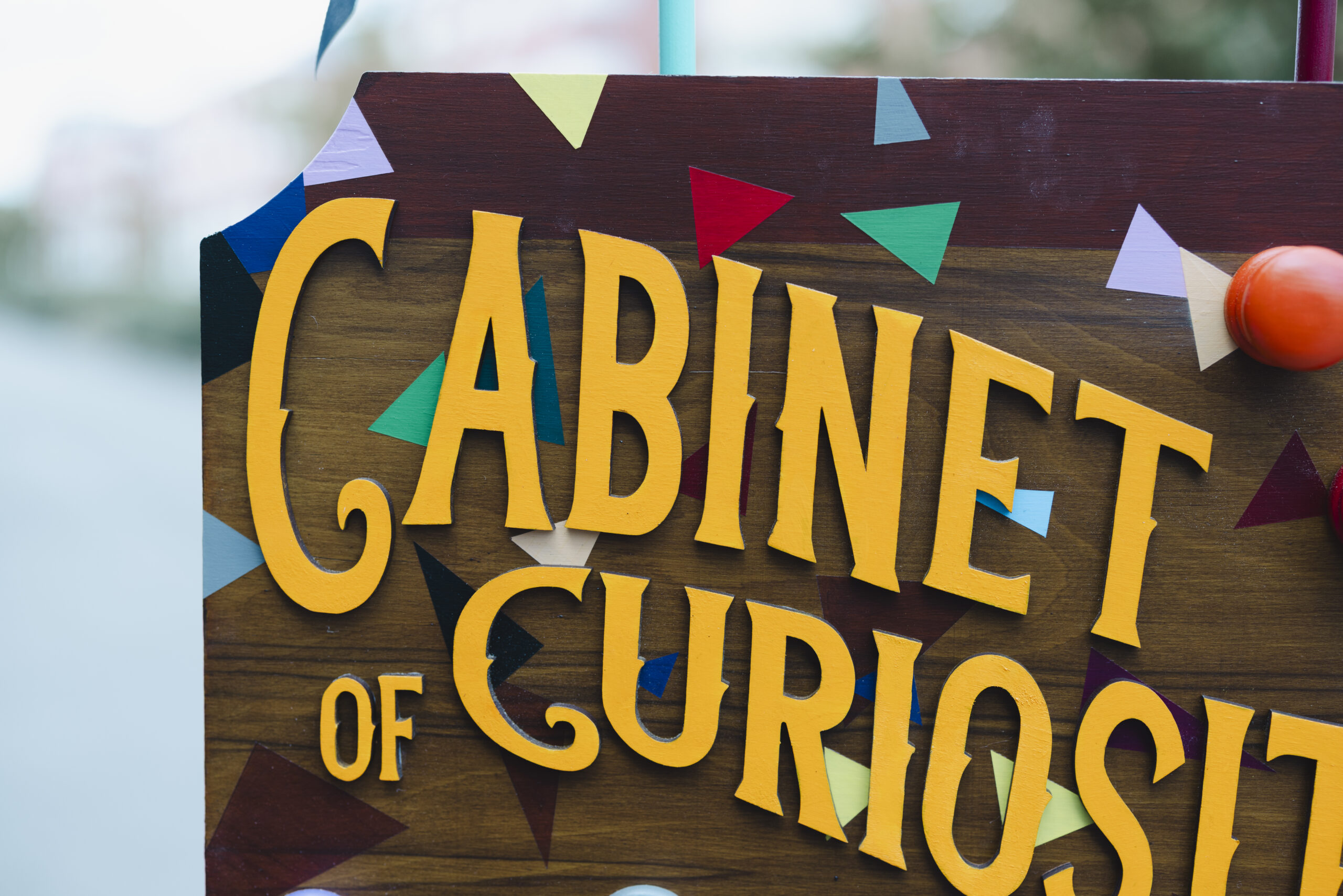
Having made its debut appearance at the Spalding Pumpkin Festival in October 2026, the Cabinet of Curiosities will now be touring the town and its surrounding areas over the next few months. Audiences will have the chance to peer inside its drawers, take part in creative activities, explore its many treasures, and contribute their own memories.
About the project
The background
So, what is a Cabinet of Curiosities? Also known as ‘wonder-rooms’ (from the German word ‘Wunderkammer’), the concept emerged in the 16th century to cover a collection of objects that defied classification. These artefacts spanned a wide range of subjects: from natural history and geology to archaeology, historical relics, works of art and more. They were forerunners to the museums we know today.
For early members of Spalding Gentlemen’s Society, regular coffeehouse gatherings were a chance to share their discoveries and discuss ‘curious’ things. Their items now form our Original Collection, which represents an incredibly rich local heritage as well as artefacts of significant national and international importance.
What we did
Our aim? To encourage more local people to become engaged with history – making curiosity, discovery and the search for knowledge open to all.
Spalding Gentlemen’s Society teamed up with Transported and artist Steven Hatton, from Electric Egg, to create an extraordinary travelling cabinet. It is packed with hidden treasures, curious objects, heritage-inspired artworks and hands-on activities celebrating the rich history of the region and our museum’s unique collections.
The cabinet was built to be interactive. Each drawer contains an unusual item, artwork or artefact inspired by the Spalding Gentleman’s Society collections. As part of the project, and alongside a range of activities, we also invite people to share stories about their own treasured objects and what they would choose to preserve for future generations.
Creating the Cabinet of Curiosities
We spoke to artist, Steven Hatton, to hear more about bringing the concept of a ‘travelling Cabinet of Curiosities’ to life and how it takes inspiration from the Society’s own collections.
Would you be able to tell us more about the project and how you created the Cabinet?
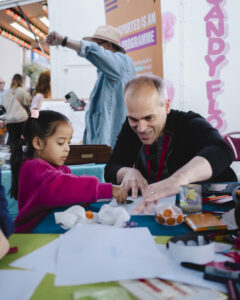
The initial idea was that we’d create something that would gain the public’s imagination: something they could gather around that almost acted as a ‘mini-museum’ in itself. The concept of a Cabinet of Curiosities is quite an established one, and actually the way Spalding Gentlemen’s Society has evolved over the years, with its members acquiring and collecting eccentric and unusual artefacts, is mirrored through this project.
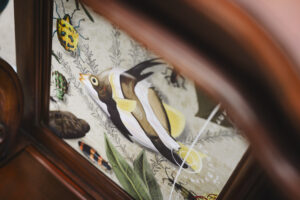
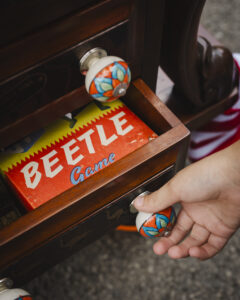
Our Cabinet is an old Davenport desk that we’ve adapted and embellished. It’s got eight different drawers, each with their own theme, and in those drawers are small historic items that people can pick up and handle.
We previously created an ARTeFACT arts trail in collaboration with the Society and Transported. This series of brass plaques around Spalding uses augmented reality (AR). You simply scan them with your phone to transpose animation onto the plaques. Building on that experience, we decided to similarly theme each of the drawers in the Cabinet to match ARTeFACT. You can pick up your phone and scan the inside of each drawer, enabling the contents to come to life before your eyes.
Are there other activities people can take part in too?
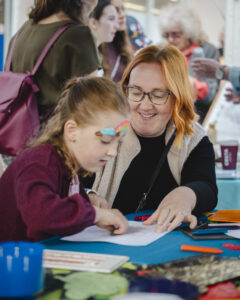
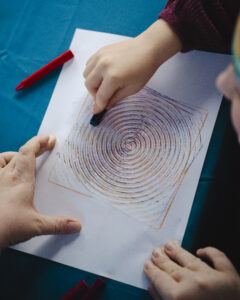
Yes, when we launched the Cabinet at Spalding Pumpkin Festival, participants could try creative activities such as making brass rubbings or zoetropes (creating the illusion of a moving picture by spinning static drawings). After finishing their activity, they brought their artwork over to the Cabinet of Curiosities for a certification process. There’s a little bit of silliness encouraged in the ritual!
The final element is to answer the question: “If you were to put something in a museum that was important to you, what would it be?” It encourages them to think about the process of collecting and the reasons behind why we preserve things. At the Pumpkin Festival, we had around 200 people taking part. Being able to raise awareness about heritage and showing the opportunities on their doorstep is really important.
Have you had the chance to explore the Society’s collections yourself?
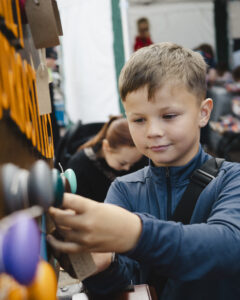
When I worked on our previous project, the ARTeFACT trail, I spent a good amount of time looking around the collections. I also got to discover different elements of the museum and photograph items that inspired our artworks.
A key element of the Cabinet of Curiosities is encouraging people to become more familiar with the museum and its collections. By taking part in a welcoming and fun arts opportunity, hopefully they will feel more open to taking that next step and visiting the museum when it reopens in spring 2027.
Do you think it’s important to make cultural activities interactive where possible to break down those barriers a little?
Well, there’s a balance, isn’t there? There’s a necessity to preserve fragile objects, but there are always ways around that notion of ‘Do not touch’. Through my work, I run workshops in schools. I take old cameras and other more hardy objects and let kids play with them. Because that tangible feeling and sense of personal connection needs to be there. When you put something behind glass and tell people that they can’t touch it, you create a barrier. There are already enough barriers – financially and socially – that can stop people going into museums and galleries. It’s important to do anything we can to break those down.
At the Pumpkin Festival, what items did people suggest putting in a museum?

It’s hard to remember 200 entries, but a few stand out! One of the children suggested their soft toy, because they loved it very much. Another lady said that it would be the first money box she ever bought, because she’s been collecting them ever since. Actually, she really got me thinking about the notion of collecting. At one point, someone said, “We’re going to put our cat in the museum.” I’m not quite sure of the collecting policy, though, and how that would work!
Do you think it’s important for people to connect emotion and feeling to artefacts?
I always think that if you go to a large and famous gallery, you have the potential to be overwhelmed by those grand spaces. Sometimes you can leave with nothing. But if you go and you already know about one artwork – maybe you’ve watched a documentary or someone’s told you a story about it – you can stand in front of that painting for half an hour. Because you’ve got that context, you’ve got that experience. If you know the stories behind items and can make that emotional connection, it’s always going to be a lot more interesting.
It’s important to consider that if a young person sees an old bedpan or a coalscuttle these days, they wouldn’t even know what it is. You need people to be able to tell the stories and bring them to life. I feel that’s where film and photography and books and all these other different forms of creative media can help fill those gaps.
Has doing this project made you think about what you would choose to preserve?
 I’m a collector anyway! I collect box cameras, which I’ve always enjoyed because they’re all essentially the same shape but each one’s very slightly different.
This project is a bit of a personal indulgence of something that already interests me. While creating the Cabinet, I went around antique shops trying to find a few curiosities that fell into the themes of the drawers. For example, one of the drawers has a horseshoe, relating to farming. The natural history-themed drawer contains a set of nesting dolls, but shaped like a tiger! It’s been really fun trying to find artefacts that might surprise people.
Have you enjoyed working on this project and seeing the Cabinet come together?
I’ve really loved the process of building the Cabinet and working with the materials. My background is as a filmmaker and photographer, but I still enjoy being able to create and think about interesting ways to turn existing objects into something else.
 There is a surreal element to the Cabinet in that when people have completed their artwork, they’re asked to say what it is, then we do a series of very silly things like measuring their picture and checking it with a spirit level. There are daft things like the Cabinet’s got socks on because it’s important for furniture to keep warm in winter. It’s really enjoyable to see people having fun, but there’s also a serious purpose behind it. The ultimate aim is to get more people engaged with the museum and to provide creative opportunities for residents to discover their local heritage. As a partnership project, everybody’s coming together for one purpose and looking to positively change people’s lives in the long run.
I’m excited to see if the Cabinet can become a bit of a community champion for Spalding Gentlemen’s Society. It could continue to go to events and be a roving ambassador for what the Society does. It also has potential to go on display at the museum when it reopens. I can’t wait to see where it goes!
Get involved
Keep an eye on our social media for announcements of where the Cabinet will be appearing next – we’d love to know what you’d choose to go in the collection! You can also see the Cabinet on:
- Thursday 29th October 2026 at Ayscoughfee Hall Museum (11am-3pm)
- Friday 30th October 2026 at Ayscoughfee Hall Museum (11am-3pm)
- Saturday 16th January 2027 at Frampton Marsh Visitors Centre (11am,-3pm)
- Saturday 23rd January 2027: St Marys & St Nicholas Church, Spalding (11am-3pm)
The project is possible thanks to SoundLincs Future of the Past project, funded by the National Lottery Heritage Fund, made possible thanks to National Lottery players. The project is also supported by Transported through Arts Council England’s Creative People and Places programme, funded by the National Lottery.
