Collections
Museum
The museum collection is, with the exception of the Ashmolean, the oldest in the UK. Some of the early museum specimens have vanished for, in the course of the centuries, the Society had many homes in various parts of the town before it built its present museum.
 The museum contains, among other things, a rare specimen of James Christopher le Blon’s tapestry A head of Christ, presented by Sir Richard Manningham in 1732, and a fine astrolabe dated 1565 of Flemish workmanship, formerly in the possession of Sir Christopher Hatton (1540-1591), Lord Chancellor of Queen Elizabeth. A map of Spalding executed for us in 1732 by John Grundy, a member, is in the Johnson Room. A 15th century missal, thought to be from the former Benedictine Priory at Spalding, a gift of the founder, and a beautiful 13th century illuminated manuscript Bible presented to us by Richard Collins, the miniature painter and an early member, are greatly prized.
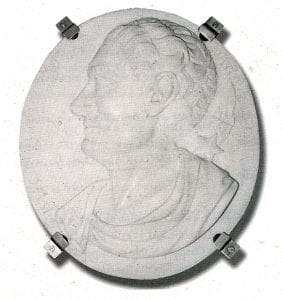
In 1735, four great portfolios were filled with a collection of prints, drawings and plans, which are still carefully preserved. Among later acquisitions are the Charter of Deafforestation of lands in Spalding and Pinchbeck, a beautifully illuminated piece of work of the time of Henry IV, dated 15th October 1399, and the Wrest Park Cartulary of Croyland Abbey, written in the reigns of Edward III, Richard II and Henry IV. In the entrance hall is a very fine marble relief of Sir Isaac Newton by the Flemish sculptor, Laurent Delvaux (1696-1778) who lived in London in the early 18th century where he executed works in bronze and marble for Westminster Abbey. Local items too are well represented.
The Bailey Room recalls the long and valued service rendered by George W. Bailey, for many years Curator and Secretary. It contains examples of his work in oil and water colours. A portrait of George Bailey, by local artist Rex Pitts, also hangs in this room.
To contact the curators, please email us at curator@sgsoc.org.
Library
The SGS Library holds approximately 30,000 printed books, periodicals, maps and prints. The collection is made up of the Society’s 18th century museum library, the Parish Library of St Mary and St Nicholas, the 18th century Spalding Grammar School library, and a modern research collection. The Local Studies Collection houses the region’s premier collection of printed materials related to South Lincolnshire and the Fens.
Due to our current building works, the library and archive are only available to visit by appointment by emailing library@sgsoc.org.
On your first visit, please bring a completed Reader Registration Form, photo ID and proof of address.
Archive
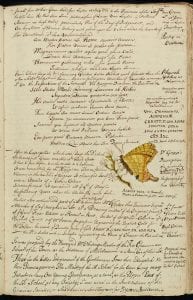
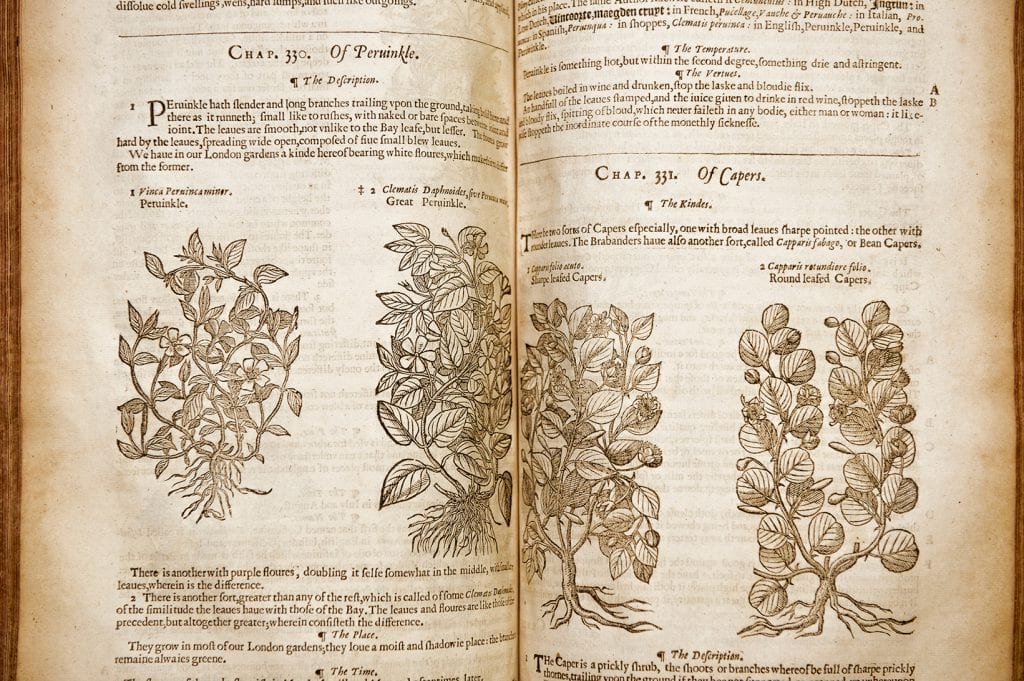
The Society’s archive houses manuscripts, drawings, maps and prints from the 13th century to the present day. Among the most important holdings are the records of the Society itself: minutes, account books, lecture notes, and a collection of correspondence that comprise the most extensive record of any provincial learned society of the 18th century. The archive also holds important manuscripts from Crowland Abbey and Spalding Priory, including the Myntling Register and Crowland Cartulary. We also preserve extensive collections relating to Spalding and nearby parishes, and civic, business, organisational and family archives dating back to the late Middle Ages.
Visitors who wish to consult rare books and manuscripts should bring a Reader Registration Form (with photo ID and proof of address), as well as a letter of introduction from someone who can provide details of their experience handling archival materials (e.g., an academic tutor, a certified librarian or archivist, etc.).
If you do not have prior experience working with archival materials, we will arrange an introductory session and provide advice and assistance as necessary.
To arrange a visit, please email library@sgsoc.org